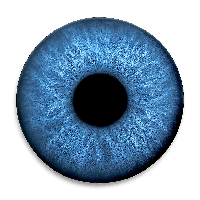
How Iris AI reads the iris — and what it can’t do.
Written by Boyan Minev, Founder · Last reviewed June 6, 2026
Iris AI started with an old craft. In Bulgaria — Europe’s largest producer of wild herbs — reading health in people’s eyes has been practised and passed from generation to generation: no blood tests, no machines, just photographs of the iris and a finger tracing the tiny marks most of us never notice. I came to the tradition at eighteen, spent years learning from its practitioners, and built Iris AI to carry that way of working forward. This page explains how the method works, and — just as importantly — where its limits are.

What iridology is
Iridology is a holistic practice with over 200 years of history. It studies the patterns, colours, and structures of the iris — the coloured part of the eye — and maps zones of the iris to different organs and body systems. It was formalised by the Hungarian physician Ignatz von Peczely in the 1880s and later expanded by Bernard Jensen, whose chart of 90+ zones is still widely referenced today. Practitioners use it to notice tendencies and areas worth paying attention to, early and gently.
How Iris AI works, step by step
- You capture your iris. The app’s guided camera centres and checks the photo so the image is clear enough to read.
- The AI maps 12 zones. It examines patterns, markings, lacunae, crypts, colour variation, and constitution type across both eyes — the same features a traditional iridologist would look at.
- You get a structured wellness plan. Across five areas — diet, herbs, nervous system, emotional balance, and movement — written to be practical, not alarming.
- You can return over time. Re-scan across months and years and compare readings side by side. The people who got the most from the old practitioners were never the one-visit kind.
What iridology can’t do
We want to be straight with you, because your health deserves it:
- Iridology is a complementary wellness practice, not a clinically validated diagnostic method. Mainstream medicine does not recognise it as a way to diagnose disease.
- Iris AI does not diagnose, treat, or prevent any condition, and it does not measure biological age or promise to extend your life.
- It is not a substitute for a doctor. For any medical concern, please consult a qualified healthcare professional. Iris AI is meant to sit alongside that care, not replace it.
What it is good at is the thing this tradition was always good at: helping you pay attention to your own body, early and calmly, and giving you small, sensible things to try.
Where our facts come from
The historical and anatomical claims on this site draw on the established iridology literature — the work of Ignatz von Peczely and Bernard Jensen — and on widely reported figures such as the roughly 28,000 nerve fibres in the iris. Where the wider wellness world now talks about “healthspan” (the years you stay active and well), we use that language because it describes what this practice has always been reaching for: the quality of your years, not just the number of them.